First, put mileage out of your mind. A car that's done few miles but hasn't been cared for properly will always be a worse buy than a high-mileage car with every service stamped and every necessary part replaced. Condition trumps mileage, every time.
So what should you actually look out for? With over 71,000 used cars imported into Ireland in 2025 alone (The Society of the Irish Motor Industry, 2026), and issues like clocking, outstanding finance, and cloned vehicles on the rise, knowing the real red flags has never been more important. Here are the five warning signs that should have you walking away.
1. It's a Write-Off (And Nobody Told You)
Should you always avoid a write-off car? Not necessarily. In some cases, a car categorised as Category C or S (repairable, but the cost of repair exceeds the car's value) or Category D or N (structurally safe with cosmetic damage, uneconomical to repair) can represent something of a bargain, if you have the ability and the budget to properly and safely repair it.

However, someone advertising a car that's been written off without telling you upfront? That's a massive red flag, and possibly the biggest one of all. Every year, more than 50,000 vehicles are written off in Ireland and over 500,000 in the UK, and many of those cars quietly re-enter the market.
This risk is particularly acute with UK imports. A car written off across the Irish Sea doesn't automatically carry that history into Ireland, meaning you could be buying a previously crashed vehicle without a trace of it in standard Irish records. Since Brexit, these gaps have only widened.
A MotorCheck history check searches for any record of a vehicle being previously written off in both Ireland and the UK, including all UK categories (A, B, C, D, S, N and F). It also includes full MOT history and DVLA data, so hidden UK history doesn't stay hidden. If the seller isn't mentioning a write-off in their advert, just walk well and truly away.
2. No Test Drive, and No Proper Inspection
A used car is still a significant investment, so you absolutely want to check out your prospective purchase before you commit any cash. If the seller tells you that you can't take a test drive, that's a massive red flag. Some excuses might be offered, usually something to do with insurance, which doesn't stand up since temporary insurance can easily be arranged, but a blocked test drive usually means there's a major mechanical issue you'd find within a few turns of the wheels.
If you're denied a test drive, don't even bother asking why, just leave well enough alone and begin your car search anew.
On the test drive
When you do get behind the wheel, make the most of it. Take the car through a range of speeds, test the brakes firmly, listen for unusual noises over bumps, and check that all dashboard warning lights clear after starting. Red warning lights in particular indicate an urgent problem, and will result in an immediate NCT fail.
Under the bonnet
Before the test drive, spend a few minutes under the bonnet. Check the oil filler cap for a thick, creamy, mayonnaise-like residue, this is a classic sign of a blown head gasket or coolant leak, and an extremely expensive repair. The oil on the dipstick should be a light amber-brown, not thick black sludge. Check the coolant level, look underneath for any signs of fluid leaks, and visually inspect rubber belts and hoses for obvious cracking or fraying.
Around the bodywork
While inspecting the exterior, look along the body panels from each corner. Mismatched paint, uneven panel gaps between doors and bonnet, or overspray on rubber seals are strong indicators of previous accident damage that's been poorly repaired. A car with compromised structural integrity is a serious safety risk, trust your instincts, and if something looks off, consider bringing a trusted mechanic for a pre-purchase inspection.
3. Missing Paperwork, or an Evasive Seller

Paperwork is one of the first things you should be looking for when inspecting a used car. Does the seller have the current logbook (Vehicle Registration Certificate)? Are they the registered keeper of the car, or can they confirm that they have the legal right to sell it? Is the service history all present and correct, along with any prior NCT test reports?
If any of that is missing, or if the seller is giving vague answers about where some of the paperwork might be, it's time to turn your back on this particular car. A missing or incomplete service record means you cannot verify how the car has been maintained, and that alone should be a deal-breaker.
These days, a switched-on seller will have all the paperwork in a folder ready for you to inspect as soon as you arrive. If not, be suspicious, or better yet, be absent.
But it's not just missing paperwork you should watch for. Pay as much attention to the seller as you do to the car. Warning signs include a seller who refuses to give you the registration number before you view (they may be trying to prevent you running a history check), who insists on meeting in a car park rather than at their home or business address, who pressures you to make a quick decision or pay a deposit to "hold" the car, or who communicates only via text and avoids phone calls.
Be especially cautious of any listing with a price that seems significantly below market value for its make, model, and year. Whether it's a Toyota Corolla, a VW Golf, or a Hyundai Tucson, if the deal seems too good to be true, it almost certainly is, and could signal anything from hidden damage to an outright scam. Always view a car in daylight, never at night or in poor conditions where defects can be hidden.
4. Outstanding Finance
This is another item that a MotorCheck history check can reveal, and it's becoming a bigger problem as more and more cars in Ireland are bought on long-term finance products such as PCP (Personal Contract Plans) or HP (Hire Purchase).
If a car has outstanding finance payments remaining, then technically the person selling it to you doesn't own it, the finance company or bank does, and that means the "seller" doesn't have the legal right to sell you the car.
Now, it is possible that there's an innocent explanation. Perhaps the seller has decided that, for whatever reason, they need to move this car on and they're going to use the money from the sale to clear the last few payments owed. That would be grand, but you as the buyer have no guarantee that's what's going to happen. If it doesn't, if the seller takes your money and leaves the car's loan unpaid, then you're in a world of financial pain. The company that originally issued the loan can simply repossess the car, leaving you with nothing and no legal recourse.
Innocent explanations are all well and good, but we're talking about a lot of your money to bet on someone's good faith. If a MotorCheck check shows that there's still money owed, turn around and leave this purchase behind.
5. Mileage That Doesn't Add Up
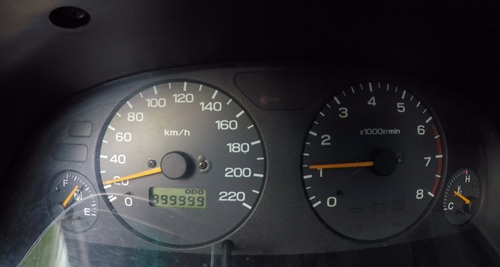
Hang on, didn't we just say that mileage wasn't an issue? It's not when we're talking about high mileage honestly presented in a clean car. Plenty of miles (or kilometres) on the clock do not represent a major problem. Where mileage does become an issue is when it's too low to be true.
Clocking, winding back the odometer, should in theory have been eradicated by modern in-vehicle technology and by regular NCT checks. But the reality is that unscrupulous sellers have long been able to get around such protections and can still tamper with even the most sophisticated digital odometers. According to MotorCheck data, 1 in 5 vehicles checked have mileage discrepancies. The problem is especially prevalent among imports, where mileage recorded in miles may be converted to kilometres in ways that mask tampering.
If you're looking at a car with very low numbers on the clock but obvious signs of wear and tear, worn or torn seats, an overly shiny steering wheel, marks and scuffs throughout the cabin, a clearly tired or smoky engine, or balding tyres, then assume it's been clocked and leave it well and truly in your rear view mirror.
Always cross-reference the odometer with the car's NCT history and service records. Better yet, run a MotorCheck report. MotorCheck maintains the Irish National Mileage Register (INMR) and draws on hundreds of millions of mileage readings, including NCT records, UK MOT history, DVLA data, and dealer service records, to verify whether the number on the dashboard tells the true story.
Before You Buy: The Quick Checklist
Every used car purchase in Ireland should start with these steps:
- Run a MotorCheck history check: verify write-off status, outstanding finance, mileage records, VIN identity, and UK import history.
- Inspect all paperwork: logbook, service history, NCT certificates, and proof of ownership.
- Take a proper test drive: at various speeds, with the radio off, listening for anything unusual.
- Check under the bonnet: oil condition, coolant level, belts, hoses, and any signs of leaks.
- Inspect the bodywork: panel gaps, paint consistency, rust, and signs of poor repair.
- View in daylight: never inspect a car at night or in poor conditions.
- Bring a mechanic: a pre-purchase inspection is money well spent if you're not confident doing these checks yourself.
FAQs: Buying a Used Car
How do I check if a used car has been clocked in Ireland?
Start by comparing the odometer reading against the car's NCT certificates and service book, as both record mileage at each visit. Look for physical signs of wear that contradict a low reading, such as a shiny steering wheel, worn pedal rubbers, or tired seats. For a more thorough check, run a vehicle history report that cross-references multiple mileage sources including NCT records, UK MOT data, and the Irish National Mileage Register (INMR).
What happens if I buy a car with outstanding finance in Ireland?
If the previous owner hasn't cleared the finance, the lending institution legally still owns the vehicle. They have the right to repossess it, even if you bought it in good faith and paid full price. You'd lose both the car and the money you paid, with no legal recourse against the finance company. Always run a finance check through a vehicle history provider before purchasing.
Is it safe to buy a write-off car in Ireland?
It depends on the category. Category C/S and D/N write-offs can sometimes be good value if the car has been properly and safely repaired, but you need the skills or professional help to assess the quality of the work. The key red flag is a seller who doesn't disclose the write-off history upfront. Be especially careful with UK imports, as a car written off in Britain may not carry that history into Irish records without a cross-border check.
What documents should I ask for when buying a used car in Ireland?
At minimum, you should ask to see the Vehicle Registration Certificate (logbook), a full service history, any NCT certificates, and proof that the seller is the registered owner. If the car is a UK import, ask for the original UK registration number and check that VRT has been paid. Missing or incomplete paperwork is one of the clearest red flags when buying a used car.
How much does a MotorCheck car history check cost?
MotorCheck reports start from just €8. A full report costs €35, this covers write-off history (Ireland and UK), outstanding finance, mileage verification via the INMR, VIN confirmation, UK MOT history, and previous registration numbers.
 by
by